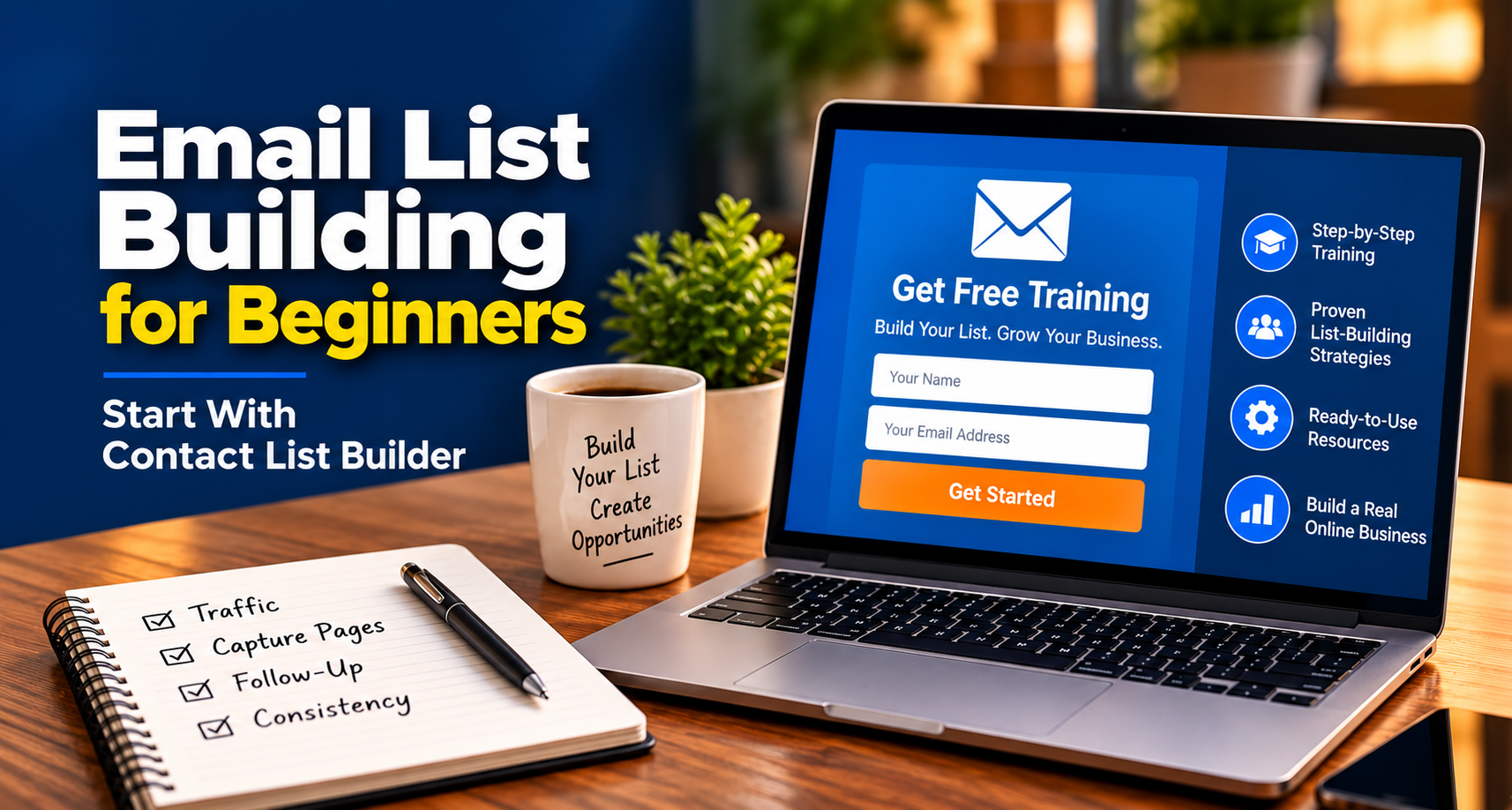

A visitor lands on a page, looks around for thirty seconds, then leaves. Perhaps they liked what they saw. Maybe they intended to return. But if there's no way to keep in contact, that might be the last time you hear from that visitor. Email list building for beginners starts with giving interested people a way to hear from you again.
That's why it's worth thinking about your email list before launching another advertising campaign, opening another social media account, or subscribing to another software service. A mailing list lets interested people hear from you again. It also gives you a way to build a relationship without having to find the same visitor all over again.
The process is not mysterious. It involves attracting people, giving them a reason to subscribe, and sending useful information afterward. The hard part is making these steps fit together. Good training can spare a beginner from a lot of frustration.
The Basics of Email List Building
Email List Building for Beginners: Why the Fundamentals Matter
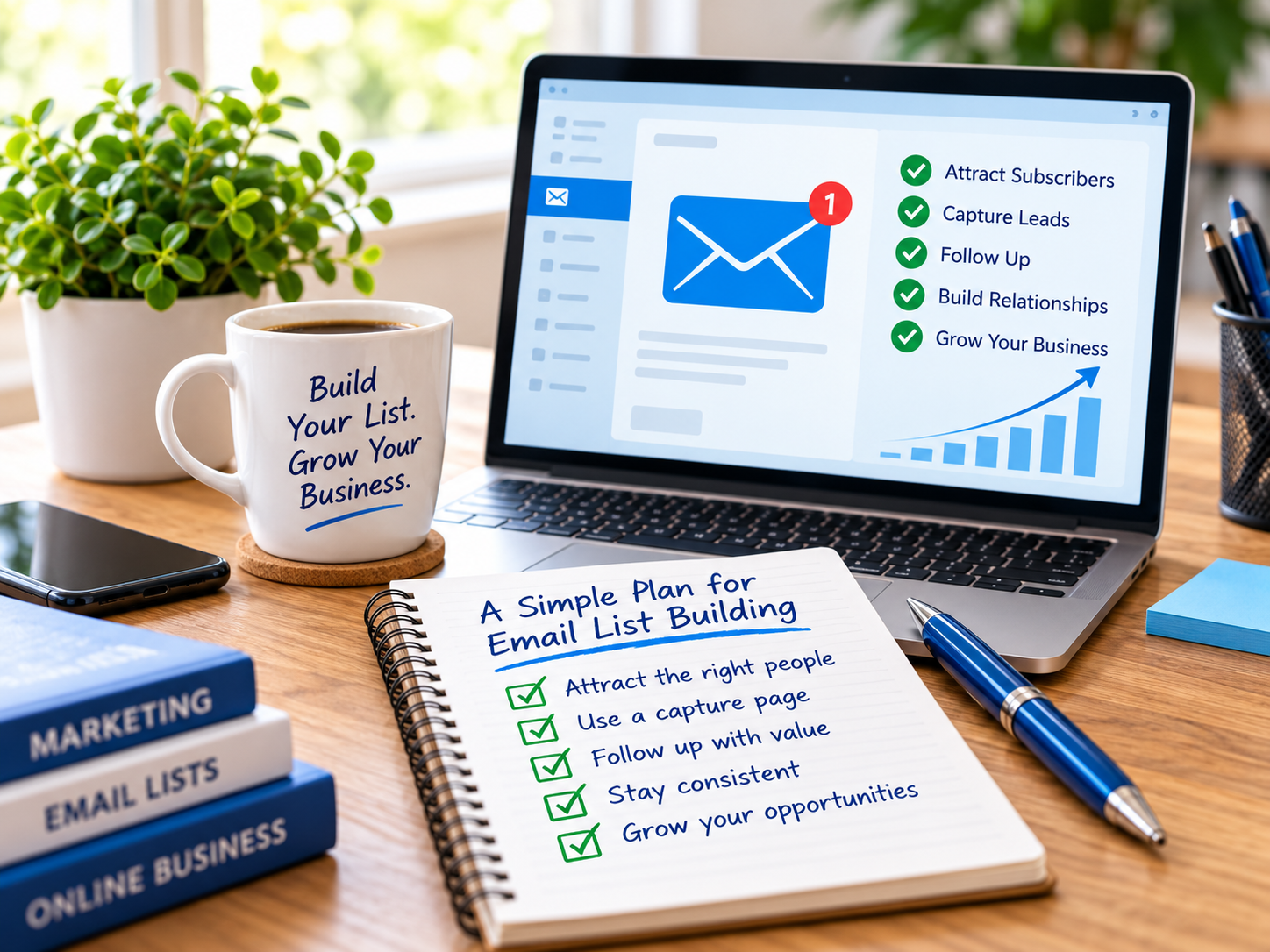
An email list is more than a list of addresses. Ideally, it is a group of people who have given permission to be contacted because they are interested in a topic, a problem, or an offer.
Permission matters. Sending unwanted messages to a purchased list is not the same as building an audience. A useful list starts when someone knows what is offered and decides to receive it. Make the signup terms clear, obtain consent, and provide a way to unsubscribe.
This is especially important in affiliate marketing. It can be tempting to focus on getting people to click a sales link because that might bring a commission. Yet most people do not buy on their first encounter. They ask questions, compare alternatives, and sometimes they simply aren't ready yet.
If the only strategy is to send a visitor to an offer, the relationship may end at the click. A well-built email list creates a chance for a second conversation, and maybe a third or fourth, if the messages remain useful.
Traffic: Bringing the Right People to Your Offer
A list cannot be built without visitors. But not every visitor is the right visitor.
Traffic can come from search engines, blog posts, videos, social media, referrals, paid ads, or solo ads. Each source works in its own way. A person searching for an answer may be more interested in a related training guide than a person who happens to see an ad.
Before spending money on traffic, ask a question: Who should this page appeal to, and why would that person want to hear from you again?
Suppose new affiliate marketers want to learn how to promote an offer. An article explaining the steps in lead generation can draw people interested in that topic. Send those readers to a relevant capture page. That begins a system. Send the same traffic straight to a sales pitch, and a high visitor count may mean little.
Measure what occurs after the click, not just how many clicks were bought. Traffic is the starting point. It is not the outcome.
Capture Pages: Turning Visitors Into Subscribers
A capture page has a job: explain why someone should give an email address.
That explanation must be specific. 'Join my newsletter' may work if people already trust you. For a new visitor, a guide, a course, a useful checklist, or a clear description of the information they'll receive can give them a stronger reason to sign up.
The page need not be complex. A headline, a description of the benefit, a form, and a clear next step are often enough. Tell subscribers what to expect, and make sure the promise on the page matches what is actually received.
After someone subscribes, send them to a thank-you or confirmation page. Deliver whatever was promised. Test the process yourself, including the form and the first email, before sending traffic to it.
One broken form can waste an advertising campaign. That lesson is worth learning before the campaign costs money.
Email Follow-Up: Building Familiarity and Trust
Getting an address is not the finish line. It is the start of the follow‑up process.
A welcome email can introduce you, deliver the requested resource, and explain what the subscriber can expect next. Later emails might answer questions, share examples, discuss mistakes to avoid, or point to a useful article.
You can certainly make offers. You are building a business, after all. But a sequence that says only 'buy this' becomes boring quickly. Readers need a reason to open the next email.
An autoresponder can send a prepared sequence automatically. Automation does not turn an email into a strong one. Write to a person, not to a database entry. Make sure each email makes sense in the order people receive it, and keep your promises about what kind of content you'll send and how often.
A smaller list of engaged subscribers can be more valuable than a list of people who never wanted your emails in their inbox.
Consistency: Making the System Work Over Time
It is easy to get excited about list building for a weekend and then stop the process when the first few days are quiet.
Real improvement usually comes from a routine. Publish something. Bring visitors to a landing page. Check whether the form works. Count how many people sign up, and watch whether they keep opening or replying to your emails.
If a page gets targeted visitors but few people sign up, look at the offer and the page. If people sign up but never engage, review your follow-up. If hardly anyone visits, the traffic plan needs work.
You do not have to track dozens of numbers. Start with visitors, opt-ins, and signs of engagement. Learn what those numbers tell you before adding complexity.
Common List-Building Mistakes Beginners Should Avoid
The first mistake is trying to build a business from one promotion after another. One day it's a traffic exchange, the next day it's a different funnel, and by Friday you're paying for three tools that do not connect.
Another mistake is treating subscribers as people to sell to, rather than people with a particular interest. If someone signs up for beginner list-building advice and you send them a stream of unrelated offers, that isn't useful follow-up.
Buying email addresses, making misleading promises, failing to explain what people are subscribing to, and ignoring unsubscribe requests are problems, not shortcuts.
Do not judge success by income claims or screenshots from someone else's account. Focus on whether you can attract the right visitors, earn sign-ups, and communicate with those subscribers consistently. Those are skills you can bring to any business.
Learn As You Build With Contact List Builder
Where Contact List Builder and CLB Learning Fit In
Understanding the process on paper is one thing. Setting up the pages, learning traffic methods, and knowing what to do after someone subscribes can be frustrating when you're starting from scratch.
Contact List Builder developed around building an audience instead of chasing one-off sales. Its newer CLB Learning approach puts training and practical guidance at the center. The material covers list building, lead generation, funnels, and traffic. It emphasizes learning the steps and applying them.
CLB Learning is the creation of my good friend Janet Legere, who has been teaching and developing list-building resources for years. Its public materials describe step-by-step instruction, training sessions, and access to marketing resources. Some features are free for people who join, while additional resources and services are part of an upgraded membership.
That distinction matters. Training can explain what a capture page does or how a funnel should flow. Other software may still be needed to host pages, manage subscribers, or send automated emails. It is worth understanding exactly what is included in any membership before choosing tools.
For beginners, the appeal is having a place to learn the process instead of sorting through dozens of tutorials on their own.
How to Start Building Your First Email List
Start by choosing one audience and one subject that you can truly help with. Not six different audiences. Not a pile of offers. One clear direction makes everything else easier.
Next, choose something to offer in exchange for subscribing. It could be a guide, a lesson, a resource, or a newsletter with a purpose. Build a capture page that explains the offer plainly and asks for permission to follow up.
Link that page to an email service. Then write a welcome message. Run a test of the signup process. After those steps, you can think about sending traffic. Start with one source, observe what happens, and adjust based on your results.
This is where CLB Learning can help. Instead of trying to master every aspect of marketing at once, you can tackle the list-building fundamentals one by one. Use the resources that match your membership level and apply each lesson in practice.
If you want to learn more about the program, take a look at our Contact List Builder page, which shows where it fits within the Online Techniques lineup.
From Learning the Basics to Using Automation
When you have a functioning process and a few useful follow-up messages, automation can help you repeat the work you have already done.
An autoresponder can welcome subscribers, deliver a series of lessons, and keep your communication steady when you are busy with other tasks.
A page builder can cut down the time needed to create capture pages.
Tracking tools can reveal where traffic comes from and which pages generate subscriptions.
However, do not mix up having automated tools with running an automated business. Someone still must decide whom to target, what to offer, what to say, and how to improve outcomes.
This is also why Online Techniques treats products as pieces of a system. We examined this idea in Online Business Tools: Build a Smarter System in 2026. List building is an example: the traffic source, capture page, email service, and follow-up messages must all support the same goal.
Learn what each part does before you pay for a solution. When you know which problem needs solving, picking a tool becomes much easier.
Getting Started With Contact List Builder
Email list building for beginners does not require a stack of software. It starts with an understanding of the process, an offer that fits the audience, and a willingness to test and improve.
Contact List Builder and CLB Learning provide one way into that education by offering training and resources focused on the basics. The free starting point allows you to discover the method; higher-level options are available if the extra help fits what you need.
Look at our Contact List Builder page, review what the program currently has to offer, and decide if the training fits the kind of business you want to create.
The aim is not just to gather email addresses. It is to create an audience that has a reason to listen to you again—and to have a system you know enough to keep improving.