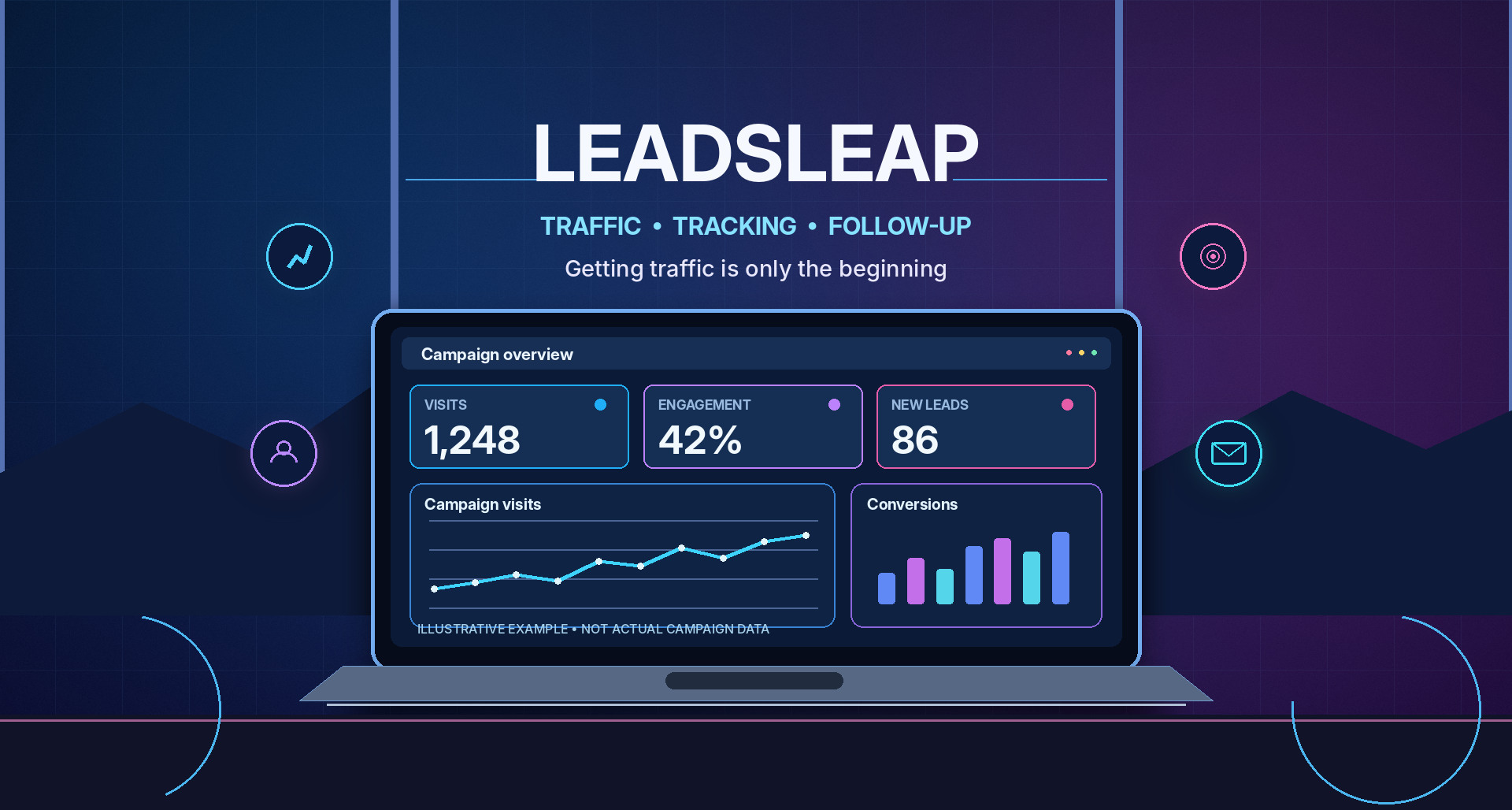

LeadsLeap marketing tools can help fix a problem that has annoyed marketers for years. Getting visitors to an offer is one task. Learning what those visitors actually do is another. It is easy to celebrate a hundred clicks. It is harder to explain whether those clicks brought you subscribers, inquiries, or customers.
I have worked in marketing since the 1990s, and one lesson has stayed true through nearly every change in technology. Traffic does not have business value unless it reaches the right people and gives them a useful next step. A click is not a relationship. A visitor who never understands the offer is not a prospect just because a tracking report counted the visit.
That is why I find LeadsLeap worth examining as more than another place to advertise. LeadsLeap combines member-based advertising with tools for building pages, capturing contacts, following up, and monitoring links. The value is not that you get access to a menu of features. The value is whether you can use those features to build a process you understand and improve. The same principle runs through my earlier article, Online Business Tools: Build a Smarter System in 2026.
What Good Traffic Tools Should Accomplish
Start With the Visitor You Actually Want
Before choosing a traffic source, decide who should see the offer. A person interested in starting an affiliate business may respond to beginner training, a list-building guide, or a simple marketing system. Somebody looking for a service or an expensive specialized product may be a very different audience.
LeadsLeap attracts marketers and people exploring business opportunities. That makes LeadsLeap's advertising environment a reasonable match for certain offers, particularly marketing tools, training, and programs that help people promote a business. It does not mean every offer will fit the audience well.
I would start with one question: What does the visitor hope to accomplish? If the answer is learning how to get started, the first page ought to explain the step in plain language. If the visitor already knows the general subject, a comparison or practical demonstration may be more useful. Sending both people to the same generic page and expecting identical results is asking too much of the page.
The temptation in marketing is to chase whatever source promises the most visitors for the least money. Twenty people with a real interest can be more useful than hundreds who have no reason to stay. That is why I think about traffic quality before traffic volume.
Traffic Is a Starting Point, Not a Result
LeadsLeap provides member advertising, including a credit-based approach, along with a traffic co-op and additional advertising opportunities. Members can earn exposure through participation, while the Pro membership provides advertising options, including ads that can run without relying on earned credits.
That range is useful because a beginner can explore how the system works before committing to every paid feature. Someone running promotions may prefer a more predictable routine with Pro. Neither arrangement eliminates the need to test the message and the page that receives the visitor.
Consider two advertisements for an email marketing service. One promises a shortcut to making money. The other offers an explanation of how to organize an email list and follow up with people who request more information. The first may attract curiosity clicks, but the second has a better chance of bringing in someone interested in the actual service.
The important numbers begin after the advertisement. Did the visitor reach the intended page? Did they stay long enough to understand the offer? Did they subscribe, request details, or take the next step? A traffic source is doing its job when it brings an audience you can serve, not merely when it produces activity on a counter.
Build a Simple Path Before Scaling It
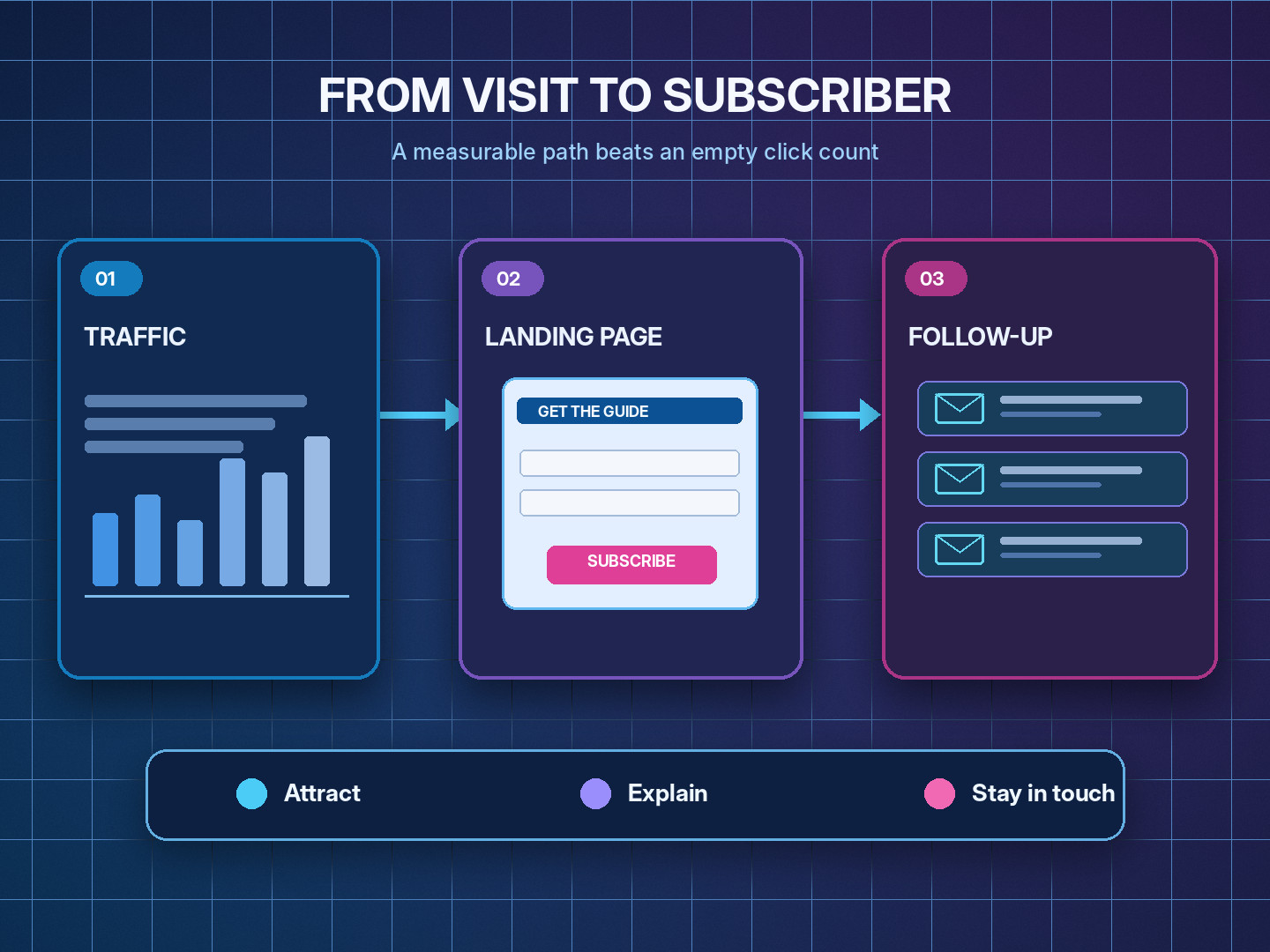
A visitor needs somewhere to go. LeadsLeap includes a page builder and popup tools so a marketer can create a landing page and collect interest without assembling a collection of services first. Its SendSteed List Manager also gives members a way to manage email subscribers and broadcasts, with automated email series available through Pro.
That creates the possibility of a sequence: advertisement, landing page, subscription, welcome message, and continued follow-up. The sequence itself is not complicated. What takes thought is making each step meaningful to the person taking it.
An advertisement should lead to a page that matches what was promised. A form should explain what somebody will receive. The first email should deliver on that promise rather than immediately switching to an unrelated promotion. If these pieces do not agree with one another, more traffic will not repair the experience.
I have seen online marketers get caught up in the details of a funnel while forgetting what it feels like to be a newcomer. I prefer to start with a page that answers one question and follow-up that truly helps, rather than a complex setup that no one has tested.
Where LeadsLeap Fits Into an Online Business
A Collection of Tools That Can Work Together
LeadsLeap offers more than ad space. In addition to its traffic network, it includes a page builder, a popup creator, a link tracker, link rotators, and the SendSteed email system. The free membership provides a useful set of tools, while the Pro plan adds more capacity and automation.
Having those functions inside one marketing environment is practical. You can promote a page, watch the visits that come in, capture leads, and keep communicating with them. For an operator, this can cut the time spent hopping between unrelated dashboards.
However, I do not think every marketer must move every tool into LeadsLeap. If you already have a WordPress website, an email service, and pages that convert, you might only need its traffic and tracking features. A platform becomes more useful when you pick the parts that solve a problem.
I also do not mix up LeadsLeap's SendSteed with SendShark. Both are email marketing services, but they are separate products. LeadsLeap includes SendSteed inside its platform; SendShark is an autoresponder and lead-page product that we will look at separately on Online Techniques.
Track the Visit, Then Learn From It
One of the useful LeadsLeap features is link tracking. Instead of sharing a plain destination URL everywhere, you can create a tracking link for a campaign and review the activity it generates. The tracker can report visits and engagement signals, helping you differentiate sources instead of lumping all traffic into one anonymous group.
For example, imagine you promote an article or capture page through a social media post, a mailing, and a LeadsLeap ad. Using tracking links gives you a clearer picture of where visitors come from. If one source brings visits but almost no one continues, that tells you something different from a source that brings fewer visits but more sign-ups.
The purpose is not to stare at statistics all day. It is to make a decision. Maybe the headline draws the wrong audience. Maybe the landing page asks for too much too early. Maybe the content and offer do not match. Tracking can point you toward a question worth exploring.
No tracking system can reveal everything about a person's intentions. Privacy rules, technical limits, and normal browsing habits leave gaps. I use the numbers as evidence to guide a test, not as proof that I understand every visitor.
What to Understand About Free and Pro
LeadsLeap offers a lifetime free membership that gives access to advertising and several core marketing tools. That helps someone learning the basics or working on a budget. The Pro plan adds capacity and features such as ongoing Pro advertising and automated email follow-up.
There is a difference. A free account can help you learn the platform and start testing; it is not the same as every feature offered to a paying member. In particular, SendSteed's automated follow-up series are a Pro feature, although free members can build lists and send a limited number of broadcasts.
I use LeadsLeap Pro in my marketing work, but that does not mean upgrading should be the first thing everyone does. If you have not written an offer or set up a page worth promoting, extra capacity can simply let you repeat an ineffective campaign more often.
A sensible approach is to understand the tools, find the limitation that truly holds you back, and then decide if the Pro features justify their cost. Check the membership options when you are ready to act; evaluate features and prices against your workload, not someone else's income claims.
A Practical First Test With LeadsLeap
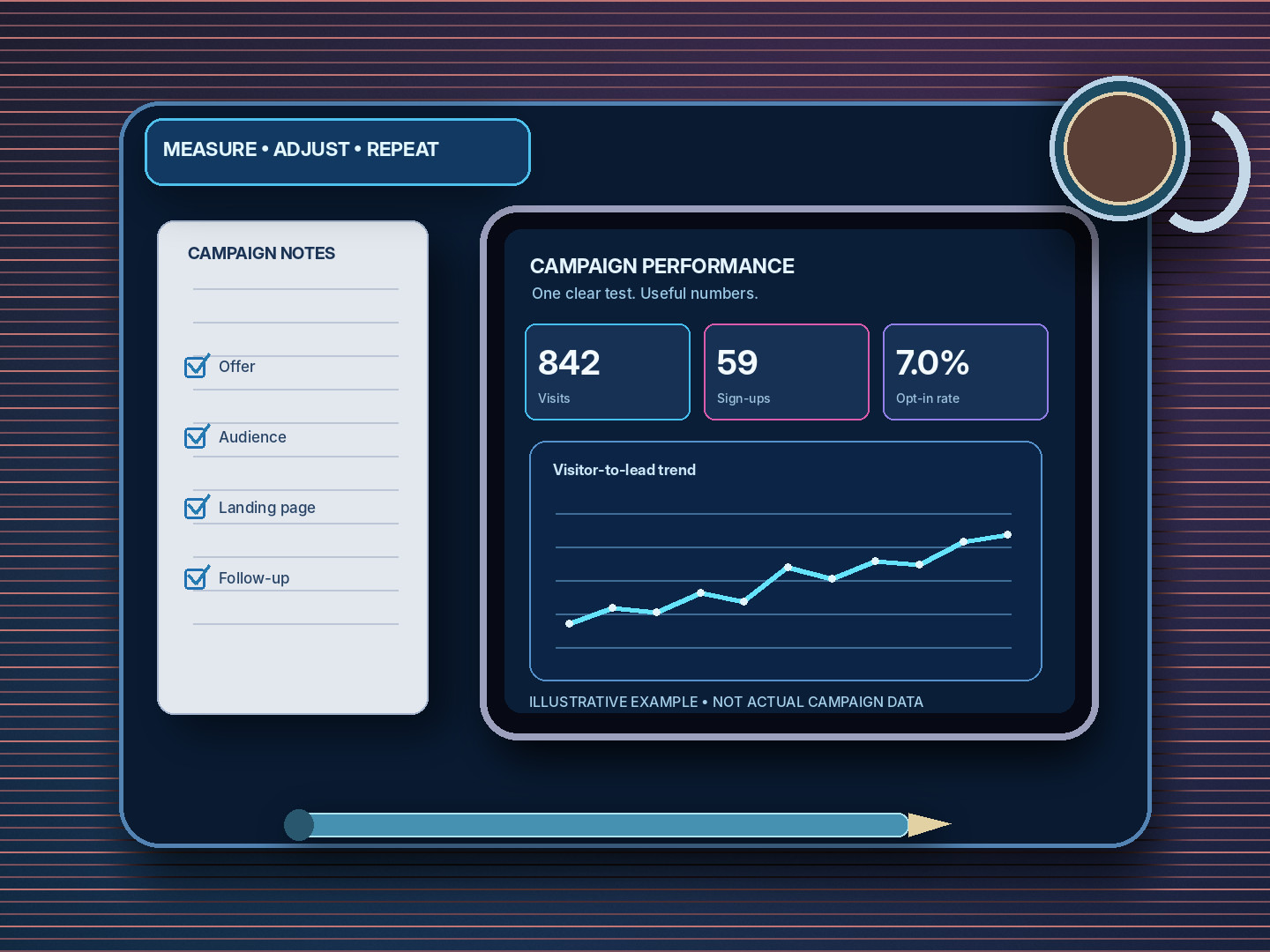
If I were building a campaign, I would keep the first test deliberately small. I would choose one offer, describe the audience in one sentence, and write a landing page that explains one next step. If the goal is subscribers, I would make the subscription promise clear and create a useful welcome email before buying or generating extra traffic.
First, I would attach a tracking link to the campaign and run it through a single traffic source. The main goal is to make sure the whole path works. Can a visitor reach the page? Does the form submit correctly? Does the subscriber receive the promised information? Are the visits visible in the tracker?
After that, I would focus on behavior. A low subscription rate could signal a targeting problem or a page problem. A healthy number of subscriptions with little email engagement might indicate weak follow-up or an offer that does not match subscriber expectations. Make one change and test again instead of rebuilding the entire campaign each afternoon.
This also connects to my article on email list building and Contact List Builder. Attracting the visitor matters, but a business needs a method for staying in touch. Traffic and list building are tasks that become more valuable when they support each other.
Is LeadsLeap Worth Exploring?
For someone promoting marketing resources, building an affiliate business, or learning how to connect traffic with a capture page, LeadsLeap deserves a serious look. LeadsLeap's appeal is the mix of advertising and supporting tools, especially when a person wants to experiment without signing up for separate platforms.
I would be less enthusiastic about using LeadsLeap as the main traffic strategy for a business whose audience has little overlap with internet marketing. The people a business wants to reach should determine the marketing channel, not the other way around. Nor would I confuse credits, ad views, or potential platform earnings with evidence of a profitable business.
The larger point is that traffic needs a destination and a reason to move forward. LeadsLeap can provide pieces of that arrangement. The responsibility lies with the business to decide what it is offering, who should see it, and what it will learn from the results.
You can find more LeadsLeap information from Online Techniques here. Start with tools that solve a problem, build one measurable campaign, and improve that campaign before attempting to do everything at once.