

SendShark email marketing focuses on a part of building an online business that many people miss: what happens after someone agrees to stay in touch. Getting a new subscriber is encouraging. But simply having an email address does not build trust, explain an offer, or give that person a reason to open the next email.
I have watched marketing evolve from websites to traffic exchanges to social platforms and now to sophisticated automation. One thing has not changed: people usually need more than one encounter before they decide whether a product, service, or recommendation fits their lives.
That is why I treat email follow-up as a core business task, not just a technical tool. An autoresponder can send information automatically. The value still depends on what's said, when it's said, and whether the message is relevant. SendShark brings autoresponder campaigns, subscriber management, and lead-page building together in one service. I would evaluate it in the context of the relationship I want to build, not just the number of emails it can send.
The Real Job of Email Follow-Up
A Subscriber Is the Beginning of a Conversation
Imagine a person reads an article about starting a business and then asks for a guide. That person is curious, but probably isn't ready to buy everything mentioned in the article. They may be comparing approaches, learning terms, or deciding whether the subject deserves more of their time.
If your first email only asks for a purchase, you have not done much to justify the invitation into that person's inbox. A useful welcome message should remind the person why they subscribed and deliver what was promised. A second message might explain a beginner mistake. Another could show how the ideas work in a practical situation.
That is not a sales trick. It is communication. You answer one question, then provide another useful piece of information. A product recommendation becomes more meaningful when readers understand the problem it solves.
A subscriber can also lose interest, and that is not a failure. A mailing list becomes healthier when the people receiving messages genuinely want them instead of feeling trapped in a sequence they never asked for.
Plan the Sequence Before You Automate It
An autoresponder sends messages based on a schedule or an action, letting new subscribers receive a series without your having to write each email individually. SendShark supports timed follow-up campaigns and individual broadcasts. It also provides tools for composing messages in HTML or plain text.
I would start with a short sequence instead of trying to write thirty sales messages in one afternoon. First, deliver the promised resource and introduce yourself. Next, help the reader solve a problem tied to the topic. Then share an example, an explanation, or an article that adds context. After that, I would make a direct product recommendation if it is genuinely relevant.
The timing should fit the subject. Some information is useful immediately; other topics benefit from a few days between messages. Sending more often does not automatically make a message more persuasive. A sequence should feel like correspondence from someone who understands the audience, not like a stopwatch attached to an advertisement.
Every message needs a purpose. If you cannot explain what the reader should learn or be able to do after opening it, that message probably needs more thought before it joins an automated series.
Use Broadcasts for Timely Communication
A sequence works well for information that stays useful over time. An online business also needs to tell subscribers about new articles, webinars, product updates, or changes that affect customers. That is where a broadcast is helpful: one message sent to a selected group at a particular time.
SendShark supports scheduled sends, so a marketer can use both follow-up sequences and timely broadcasts. The distinction matters. New subscribers can receive an introduction while existing subscribers hear about something new without restarting the entire welcome sequence.
This is especially relevant to the way we're building Online Techniques. We plan to keep publishing articles that approach familiar products and marketing problems from different angles. Email can bring readers back to useful content instead of forcing every message to become another direct promotion.
A good broadcast should give readers a reason to care before asking them to click. Saying 'Here's our newest post' is less compelling than explaining which problem the article can help solve. When somebody clicks, the destination should keep the promise made in the email.
Where SendShark Fits Into the Process
Autoresponders, Lists and Lead Pages Together
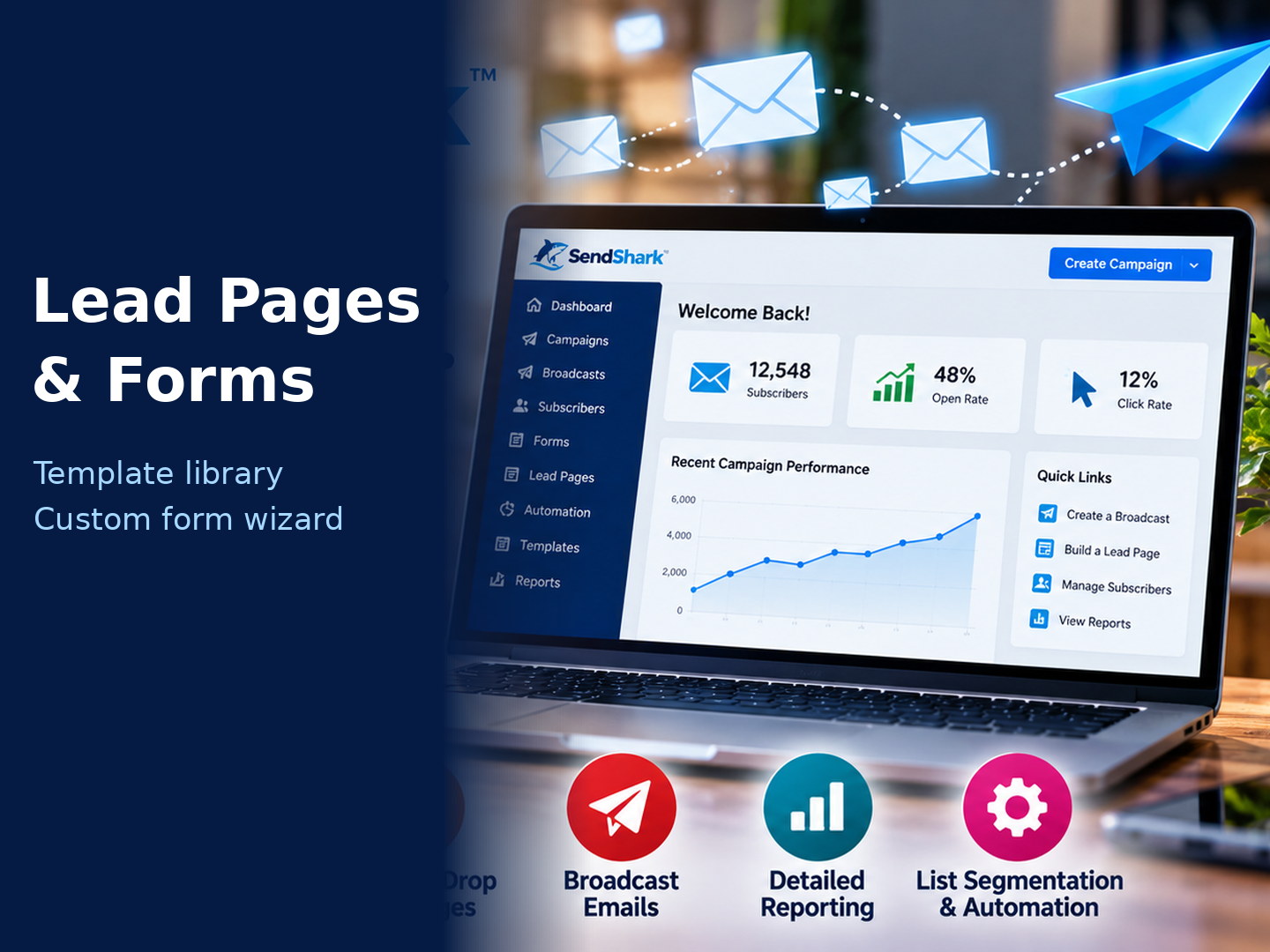
SendShark provides an autoresponder service, subscriber management, and a drag-and-drop lead-page builder. It also includes a comprehensive collection of ready-made forms and a powerful form wizard for creating customized forms of your own. Together, these tools make it easier to build pages that collect subscriber information and connect those subscriptions to automated email follow-up.
The lead-page builder includes templates and editable elements for explaining an offer and gathering subscriber details. You can add forms, fields, submission buttons, and supporting page content. The email tools cover campaigns, broadcasts, message editing, and reporting. These functions help connect someone's initial interest with what happens afterward.
I wouldn't pretend that having everything in one place automatically produces a business. The tools make a process possible. They don't supply the offer, decide which visitors should see it, or write messages that earn trust. Somebody still has to make those decisions.
You do not have to use every built-in feature. If you already operate a WordPress site and have landing pages you like, you may focus on the email capabilities. If you are just starting and do not have a page-building system, having lead pages and ready-made forms inside SendShark may make setting up a campaign easier.
Segmentation and Engagement Are More Useful Than a Huge List
SendShark provides ways to filter subscribers and report on opens and clicks. The practical point is that not every subscriber behaves the same way. A person who clicks an article about email list building has shown a different interest from someone who spends time reading about hosting or traffic generation.
You do not need an elaborate classification system to use that information. It may be enough to organize people by topic or follow up with those who have shown an interest. Relevance matters more than trying to send every promotion to everyone.
Open rates and click data can suggest which topics attract attention, but they do not measure a person's interest exactly. Privacy features and technical limitations can distort those reports. One click does not mean somebody is ready to buy. I would use those indicators to improve the conversation rather than label a person based on a single action.
This is why I am not especially impressed by subscriber counts alone. A modest list built around genuine interests can be more useful than thousands of addresses with little reason to stay in touch. The goal is a relationship with people who actually want the information you offer.
Deliverability Is an Ongoing Responsibility
Any email service can talk about its delivery performance. No autoresponder can promise that every message will land in every recipient's inbox. Deliverability depends on several things: your sending domain, message authentication, list quality, subscriber engagement, content, and decisions made by receiving email providers.
SendShark provides tools for handling bounces and unsubscribes, along with performance reports. Those tools matter because responsible senders need to stop mailing addresses that no longer work and respect people who decide to leave a list.
There are also obligations that go beyond what a software dashboard can handle. Commercial email in the United States must comply with CAN-SPAM requirements, including truthful sender information and subject lines, a valid postal address, and a working way to opt out. Major email providers also have sender requirements. Those considerations belong in the setup from the beginning, not as an afterthought when deliverability problems appear.
I would also make a habit of sending test messages to check that links work and to see how an email looks on a phone. A successful send is not much use if the promised download is broken or the message is unreadable.
How SendShark Relates to Other Marketing Tools
One reason to examine SendShark on its own is that email marketing deserves attention beyond the initial signup. Contact List Builder focuses on helping people learn and apply the list-building process. LeadsLeap offers traffic, page creation, tracking, and its own SendSteed email service. SendShark focuses on autoresponders, subscriber management, forms, and lead pages.
These products overlap, but that does not mean you need to subscribe to all of them. An online business needs a way to capture permission, organize subscribers, and follow up. Once that process is clear, you can decide which service does those jobs best for your situation.
If you already use SendSteed through LeadsLeap Pro and it meets your needs, you should understand what additional value SendShark would provide before paying for another autoresponder. If your marketing operates independently of LeadsLeap, or you need a different email workflow, SendShark becomes an option worth comparing.
I do not want Online Techniques to become a catalog that lists every tool as essential. Good marketing means knowing what is needed and just as importantly, what is not needed. As I explained in my earlier article, Online Business Tools: Build a Smarter System in 2026, a tool earns its place by supporting a clear strategy.
A Sensible First Campaign With SendShark
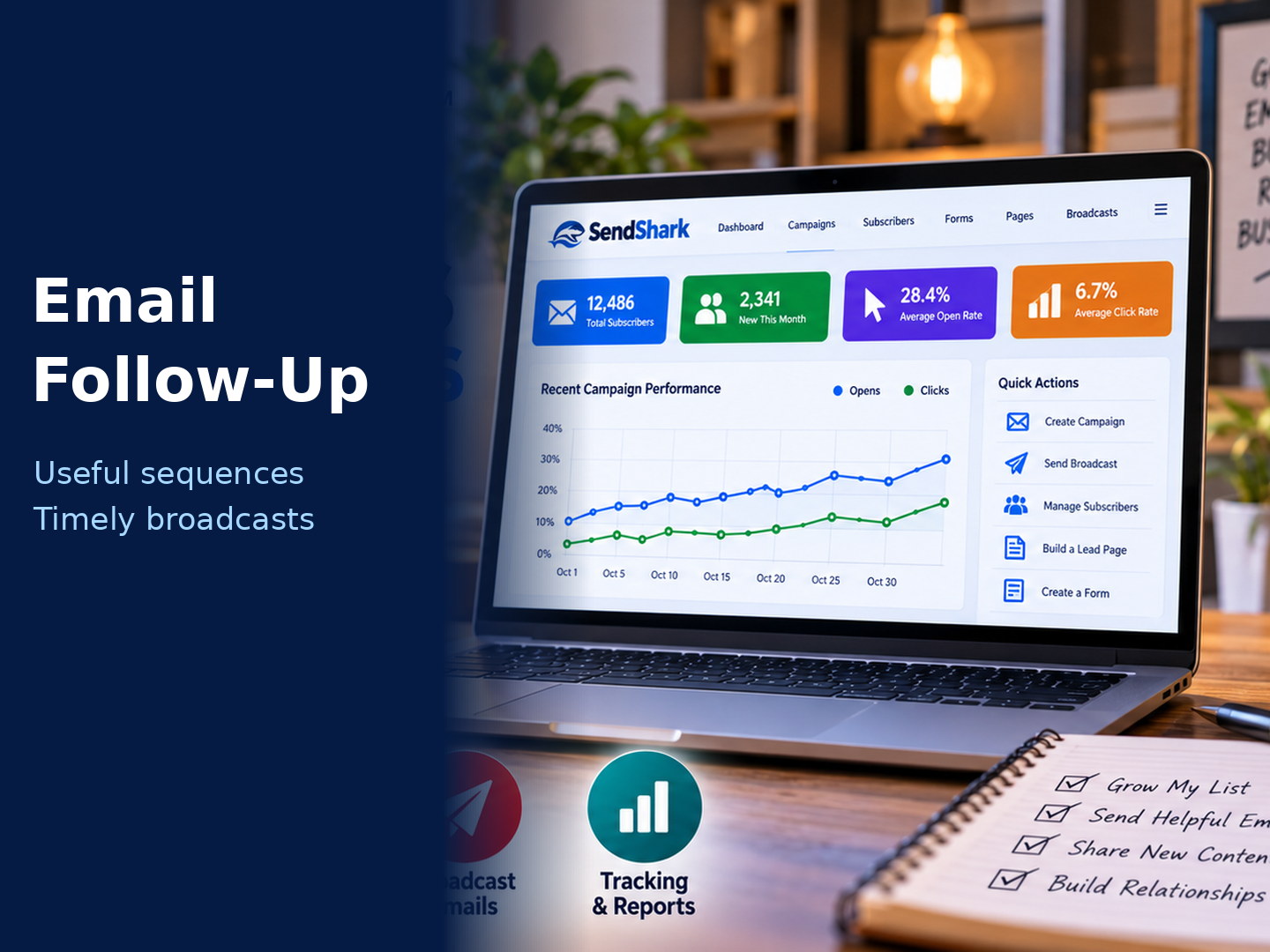
I would start with one subject and a clear promise for the subscription. Maybe readers want a checklist for arranging a marketing funnel. The lead page could explain what the checklist covers and what kind of follow-up subscribers will receive. It should not need income claims or a collection of flashing buttons to make the offer understandable.
After testing the form, I would prepare an email that delivers the checklist. Then I would write a short series of follow-up messages to answer questions likely to come next: What should the landing page accomplish? How do I attract visitors? What do I measure after a person subscribes? How do I decide which tools belong in the system?
Next, I would test the full experience using a test address: the form submission, any confirmation or welcome process, the email's appearance, the links, and the unsubscribe function. Then I would send a modest amount of appropriate traffic and watch whether people subscribe and interact with the material.
If the page gets visits but few signups, the promise or the audience may need attention. If people subscribe but rarely open or click, the follow-up may not match the reason they joined. Rather than buying more traffic immediately, I would correct the part of the process that isn't working and test again.
Once the basic sequence works, timely broadcasts can introduce new articles and useful updates. Over time, that turns a mailing list into a continuing communication channel instead of a series of sales pitches.
Is SendShark Worth Exploring?
SendShark is worth considering if you need an email marketing platform with automated follow-up, broadcasts, lead pages, ready-made forms, a form wizard, subscriber filtering, and performance reports. These tools can help move the relationship from an initial subscription toward a useful ongoing conversation with interested readers.
I would compare SendShark's features and account terms with what I already use, paying attention to subscriber limits, sending capacity, list management, and how campaigns are organized. I would not choose an autoresponder because of a promised inbox percentage or somebody else's earnings examples. The useful question is whether it helps me follow up responsibly and consistently.
Email marketing is often described as a way to make sales while you sleep. That description misses the most important part. The messages have to be worth receiving before automation makes them worth sending.
If you'd like to take a closer look at SendShark and decide whether it fits your business, click here. Build your list with permission, follow up with information worth receiving, and keep improving the conversation. That's the kind of email marketing system that can support a business long after an advertising campaign ends.